


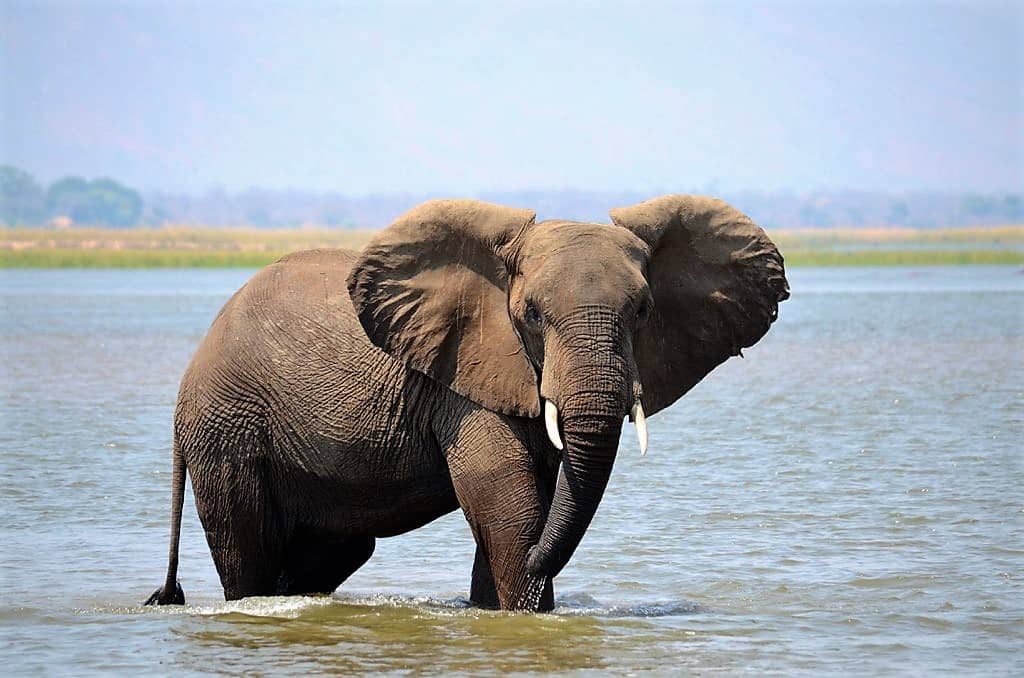
The aim of World Elephant Day is to get people talking about the value of elephants to local communities and the world. And we mean their value when they’re alive, not when they’ve been killed for their tusks. As World Elephant Day is about bringing people together to help elephants, we bring you some surprising elephant teeth facts.
SpaDental is hosting special Children’s Days over the summer holidays. Contact us to find out more!
“Lovely friendly dentist so good with the children. First time the children have wanted to get in a dentist chair! Brilliant!”
We can help our children to value elephants too. During toothbrushing time, here are some amazing elephant teeth facts to share. Do you know how heavy an elephant’s molar can be?

Set the timer for two minutes of toothbrushing then, while the brushing is going on, share this information about elephant’s teeth. It’s really incredible how different animals have developed different dentition so that they can process their food.

Elephants are well-known for their impressive tusks and still hunted for them. As we cannot see their other teeth, however, we don’t really think about them. But their back teeth are also special, and incredibly important for their health and life.
Elephant Teeth Facts – Tusks
- Elephants grow two tusks. These are their incisors. There aren’t incisors in their lower jaw.
- Tusks keep on growing throughout the elephant’s life.
- All African elephants, male and female, have tusks but only male Asian elephants have tusks that grow longer than their lip.
- Tusks are a useful tool for ripping bark, digging up roots and moving things that are in the way. Elephants can favour one tusk over the other, just as people are either right or left handed.
- The part of the tusk that shows is made of dentine covered by enamel.
- There is also a third more tusk concealed in the elephant’s head.
Elephant Teeth facts – Molars
- Elephants are herbivores. As they spend 22 hours a day chewing vegetation, they need their really big, strong, ridged, back teeth.
- Apart from two tusks (if present), elephants have only four other teeth in a set. While people’s teeth grow either up or down from the jawbone, an elephant’s molars grow in from the back of the jaw. There is one tooth for each quadrant that moves towards the front and is replaced when worn down.
- An elephant will have six sets of four molars in its lifetime. Occasionally an elephant may be lucky and have seven sets.
- Each time the teeth change, the new set is bigger. An elephant molar can be about 20cm long, and weigh 4kg.
- If an elephant lives so long it has used up its life supply of teeth, then it may die from malnutrition.

On the topic:
- Bite-sized facts about tigers’ teeth
- They have a long neck. Do they have long teeth too?
- Do turtles have teeth?
- Children’s dental care